
M Lenses
Leica M lenses are compact, manual-focus lenses for the Leica M bayonet. Every lens on this page fits every current Leica M camera, digital or film, from the Leica M6 to the Leica M11-P and M EV1. The range runs from 21 mm wide-angle to 90 mm, with maximum apertures from f/0.95 to f/5.6.

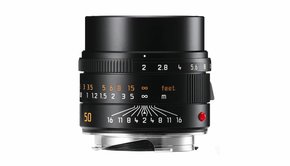

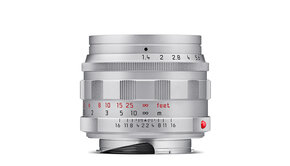

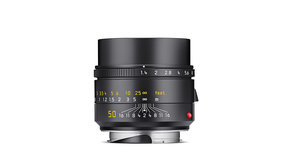
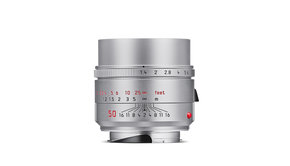
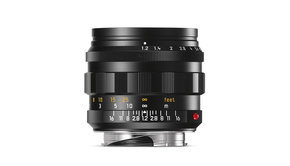
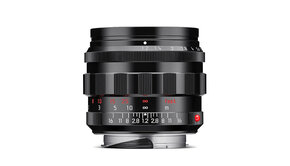
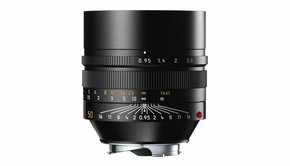
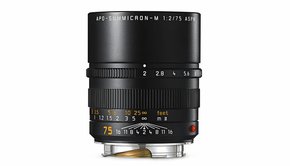
Leica M lenses — Which lens suits you?
- Leica Summicron-M (f/2): compact lenses in 28, 35 and 50 mm. A practical choice if you want a small lens that stays on the camera, for street, travel and everyday photography.
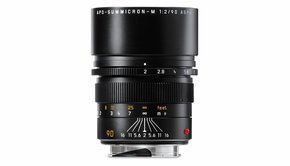
- Leica APO-Summicron-M (f/2 ASPH.): 35, 50, 75 and 90 mm with apochromatic correction, which keeps colour fringing to a minimum. The Leica APO-Summicron-M 35 f/2 ASPH. focuses down to 0.3 m.
- Leica Summilux-M (f/1.4): 21, 28, 35 and 50 mm. The f/1.4 aperture lets you work in low light and isolate your subject with shallow depth of field. Also available as the 35 mm 'Steel Rim' and as Safari Editions.
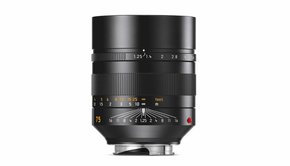
- Leica Noctilux-M: the widest apertures in the M range: 35 mm f/1.2, 50 mm f/1.2, 50 mm f/0.95 and 75 mm f/1.25. Made for available-light photography and portraits with a very narrow plane of focus.
- Compact wide-angles: the Leica Super-Elmar-M 21 f/3.4 ASPH., Leica Elmarit-M 28 f/2.8 ASPH. and Leica Summaron-M 28 f/5.6. Small and light, for architecture, landscape and travel.
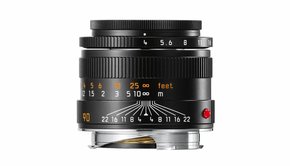
- Leica Macro-Elmar-M 90 f/4: a compact short telephoto lens for portraits, details and close-ups.
- Expert tip: the optical rangefinder of a Leica M has no frame line for 21 mm. With a 21 mm lens you compose using live view, the Leica Visoflex 2 electronic viewfinder or an external optical viewfinder. On the Leica M EV1 you see the full 21 mm frame directly in the electronic viewfinder.
Leica M lenses — Frequently Asked Questions
Do Leica M lenses fit every Leica M camera?
Yes. Every current Leica M lens fits every digital and film Leica M camera, because the M bayonet has stayed the same since 1954. Current M lenses carry 6-bit coding, so a digital Leica M recognises the lens automatically.
What is the difference between Summicron, Summilux and Noctilux?
The difference is the maximum aperture. A Leica Summicron-M opens to f/2, a Leica Summilux-M to f/1.4 and a Leica Noctilux-M to f/1.25 or wider. A wider aperture lets in more light and gives shallower depth of field, in a larger and heavier lens.
What do ASPH. and APO mean on a Leica lens?
ASPH. means the lens uses aspherical elements, which correct aberrations with fewer glass elements and keep the lens compact. APO stands for apochromatic correction: red, green and blue light focus on the same plane, which reduces colour fringing.
Which Leica M lens should I buy first?
A 35 mm or 50 mm lens is the usual first Leica M lens. A 35 mm lens suits street, travel and documentary photography, with room for the surroundings. A 50 mm lens gives a closer view for portraits and details. Both focal lengths have their own frame line in every Leica M rangefinder.
Can I use Leica M lenses on a Leica SL or other L-Mount camera?
Yes. With the Leica M-Adapter L, Leica M lenses fit the Leica SL3, SL3-S and other L-Mount cameras. You focus manually, using the electronic viewfinder and focus aids such as focus peaking.